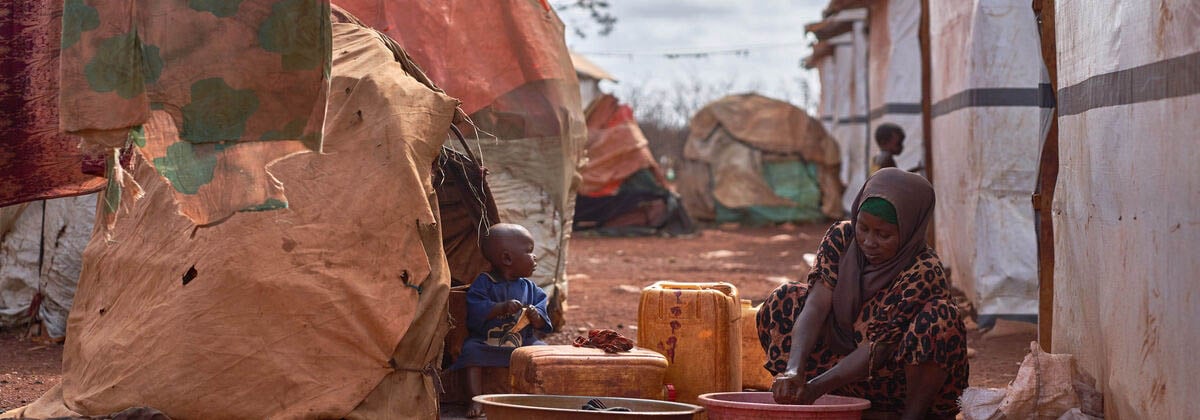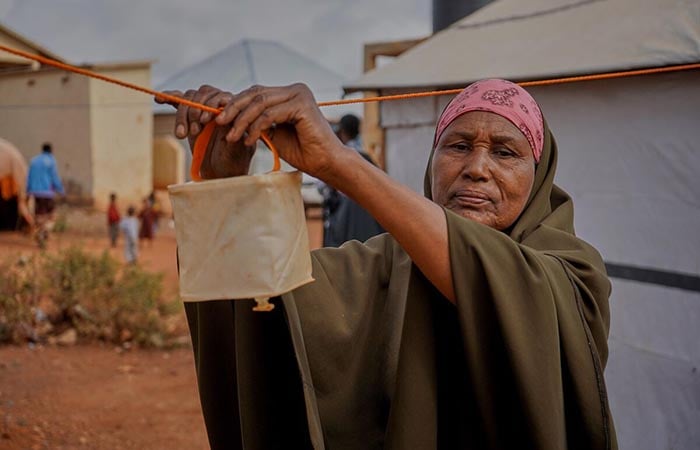
Nuria’s story: when climate change meets conflict in Somalia
Discover how climate change and conflict uprooted mother-of-ten Nuria in Somalia and how ShelterBox and Juba Foundation brought new hope with shelter, tools and five-year land tenure.
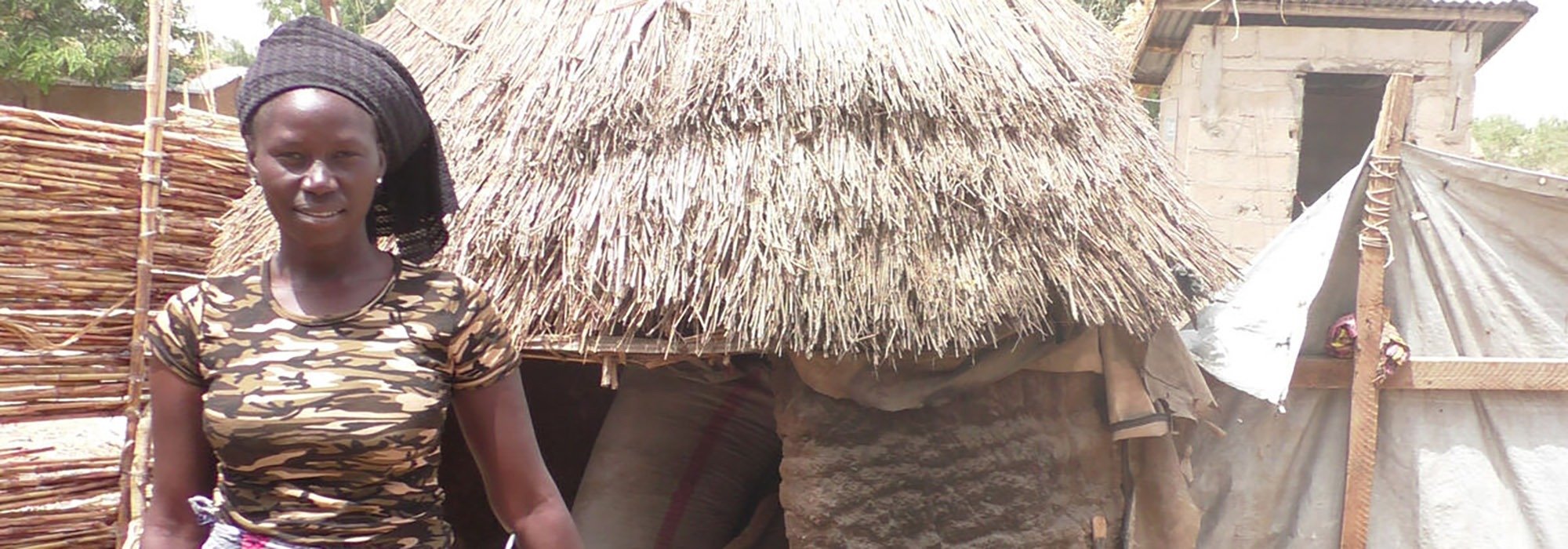
In Minawao Camp, northern Cameroon, families like Kaltoumi’s are fighting to survive on two front lines: conflict and climate change.
Kaltoumi grew up in Borno-State, Nigeria. Life was peaceful – her days filled with farming, fishing and raising her family.
But everything changed in 2014 when Boko-Haram, a violent extremist group, attacked her village.
We were all living with fear in our stomachs.
“Our village was already home to several dozen internally displaced people, entire families who had escaped death and who told us about the atrocities they had suffered.
I understood that it was only a matter of time before we suffered the same fate… and I was right.”
That day, Kaltoumi’s life turned upside down. She remembers hearing an explosion and seeing people running in all directions. Men were killed, boys kidnapped and women and girls were taken.
Without thinking, her husband shouted at her to gather what she could and to run away with the rest of the villagers. “That’s when we began our journey to the unknown…Cameroon is where God finally led us.”
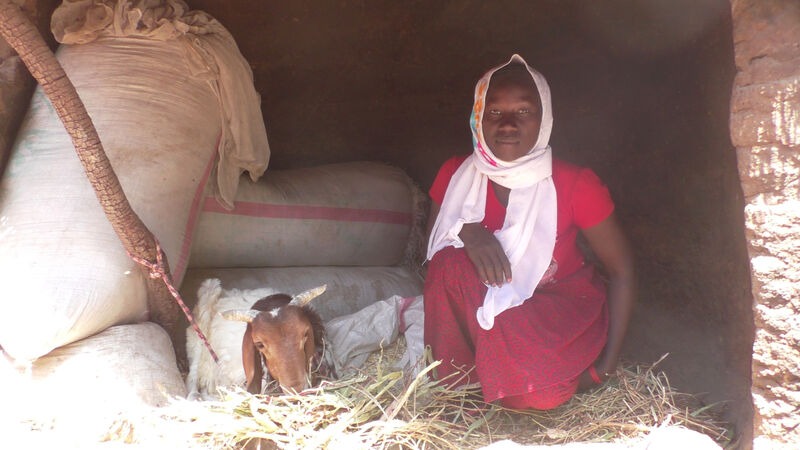

20-year-old Kaltoumi arrived in Cameroon with nothing but her baby. Fortunately, she was joined a few weeks later by her husband who had survived the terrorist attack.
Life in Minawao Camp was a shock. Gone were the trees and rivers of home. In their place, dry, dusty land and overcrowded shelters.
“I remember that my life was enjoyable back home; I never slept on an empty stomach, I visited my parents regularly and I had many friends. I grew my own food that I was able to resell for some money. I had everything to be happy.”
In Cameroon, Kaltoumi had five more children but safety didn’t mean stability.
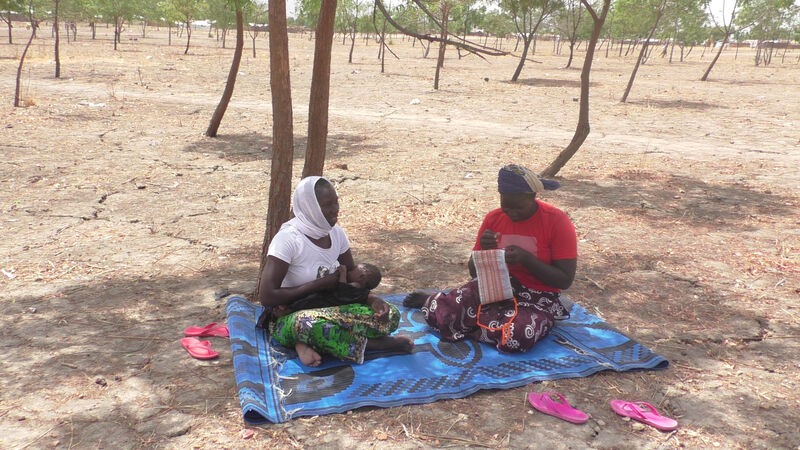
When Kaltoumi arrived in Cameroon, Minawao was green and trees offered shade. Over time, deforestation and desertification stripped the area bare. With no tree cover, daily life became a battle against unbearable heat and unexpected floods.
“The droughts destroy our crops, the water points dry up, and then come the rains, washing away our homes and tearing deep holes into the earth.”
One year, flash floods injured Kaltoumi and killed a neighbour’s daughter. With little protection from the elements, every season brings new danger.
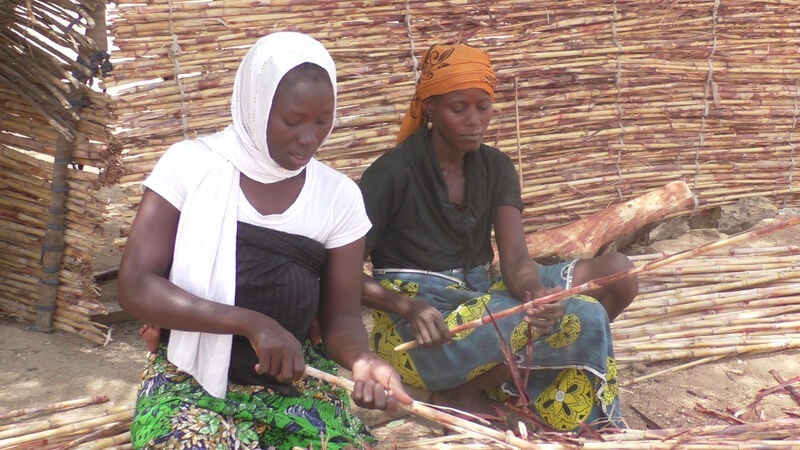
Extreme weather makes every part of life harder. For Kaltoumi’s family, the heat often made her children sick with dehydration and fever. Floods blocked roads and destroyed farmland, threatening the food they relied on. With rising temperatures shortening growing seasons, hunger slowly set in.
We wake up early, but by 9am it feels like midday, the heat is that strong. You can’t work long in the fields. The plants dry up, or the floods rip them from the ground.
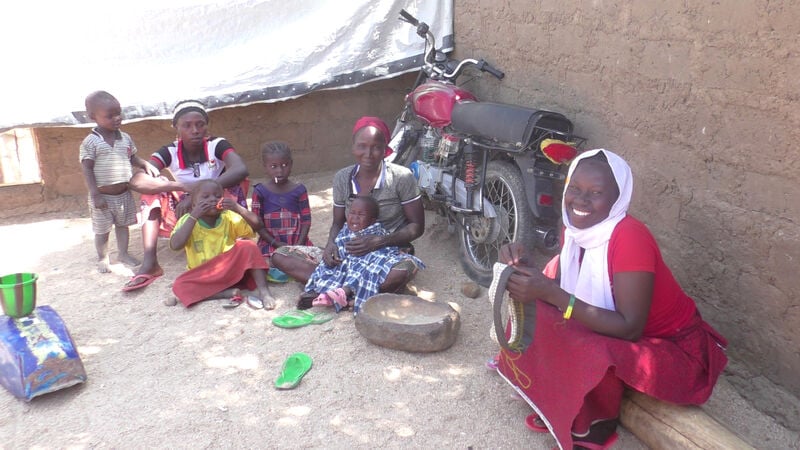
But in the face of hardship, Kaltoumi is responding with strength. Together with humanitarian groups, the community has launched reforestation projects, planting trees that offer shade, stabilise the soil, and bring a sense of calm.
“There’s a little green space behind my shelter now. I sit there with the children. Even when the heat is intense, I can breathe easier.”
New solar-powered boreholes help bring water. A local ban on tree cutting protects progress. These small, but powerful steps are helping Kaltoumi and others reclaim dignity, and comfort, from harsh conditions caused by climate change.
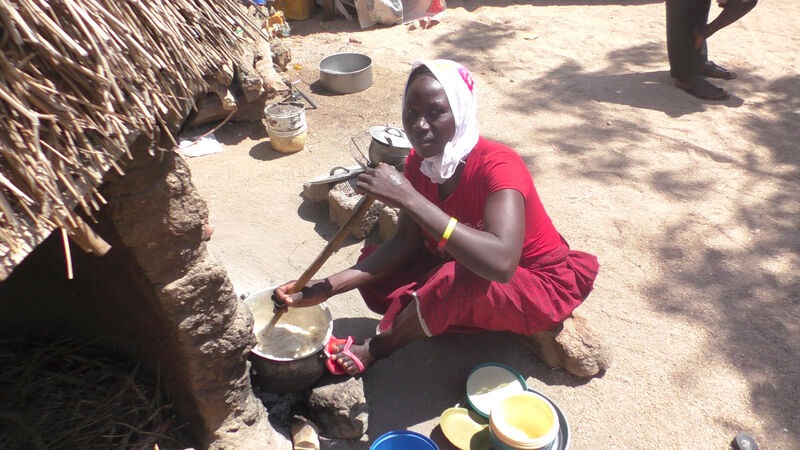
Minawao’s residents have faced war, displacement, and climate disaster.
Kaltoumi’s story powerfully demonstrates how conflict and climate change combine, making life even harder for displaced families. All across Cameroon, people are fleeing violence, only to be moved again by floods, droughts, or storms. Those escaping conflict in Nigeria often find themselves forced to relocate once more because of climate disasters.
Long droughts are drying out farmland, making it nearly impossible to grow food. And when the rains do come, they often bring floods that destroy homes, roads, and crops -worsening the hardship and displacement. Yet Kaltoumi’s story also demonstrates how community-led adaptation, and family, can spark hope.
“We may not have much, but the trees we plant, the water we gather, and the homes we rebuild… they give us a reason to stay.”
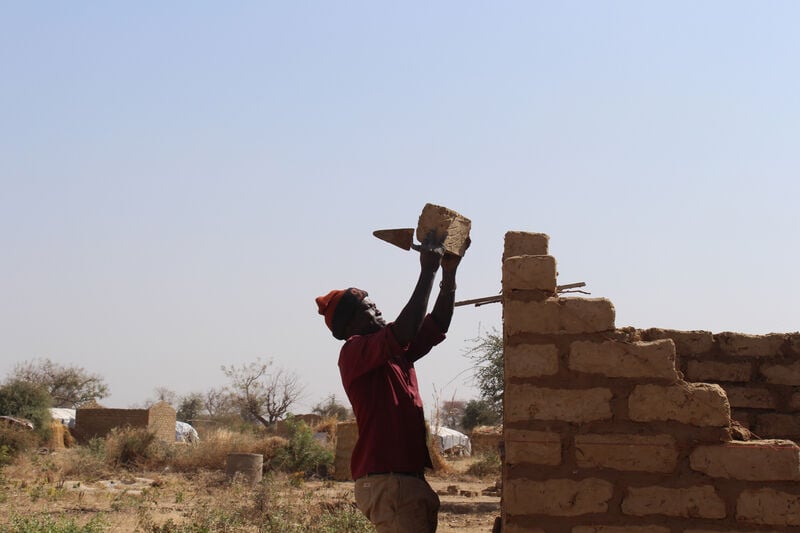
Since 2015, ShelterBox has supported over 250,000 people in and around Minawao refugee camp with shelter and emergency aid. As one of the main providers of shelter in Cameroon’s Far North region, we’ve delivered shelter packages, flood assistance, and emergency housing.
A new three-year project with our partner Public Concern will continue this vital work, supporting families with shelter repairs, essential household items, and a small number of durable mudbrick shelters to help them rebuild their lives with dignity.
Together, we can protect and empower the most vulnerable as they navigate life on the frontlines of crisis.
Learn more about how we’re responding to the crisis and how you can help:
What's happening in Cameroon?