
Climate change catastrophe: fire, drought and floods
In Somalia’s Bay region, a devastating climate shock set the chain of displacement in motion.
For Nuria and her family, everything changed when a sudden fire swept through their area. The fire struck just as a severe drought took hold – one of the many signs of how the climate crisis is devastating the Horn of Africa.
We used to earn a living by making charcoal from wood. However, things took a turn when a fire broke out in our charcoal area, and with the droughts approaching we were forced to leave.
Unable to farm or produce charcoal on burnt land, Nuria’s family lost both income and their ancestral home. They fled, facing an uncertain future.
Conflict deepens the crisis
Soon after they were uprooted by climate change, Somalia’s armed conflict deepened their suffering even further. Nuria adopted three abandoned children along the way – an extraordinary act of compassion born in crisis.
“To escape the difficult conditions we faced, my children and I fled….There were times when I faced scorching heat that seemed to take all my strength from my head to my knees. There were instances when I had to move from one place to another.”
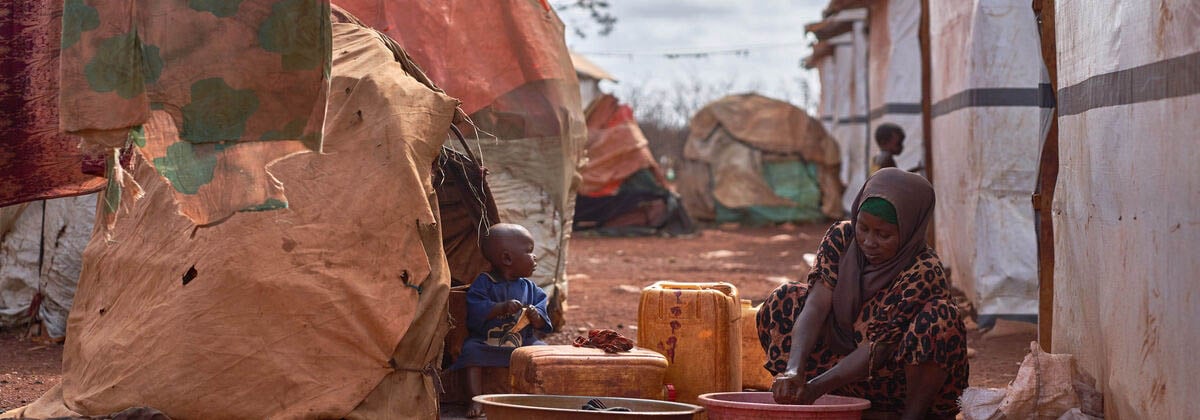
Their displacement wasn’t just caused by climate. Violence, insecurity and shifting conflict lines forced them to keep moving. In Baidoa’s displacement camps, heavy rain and flash floods brought more suffering. Makeshift shelters offered little protection.
“These relocations were prompted by the agonising period of war, unlike the usual challenges brought about by drought. … We were caught in the rain, unable to seek shelter due to our circumstances. … During this time, it became common to resort to begging for food, and often we went hungry.”
This was a particularly hard time for Nuria and her family, but sheer determination meant Nuria continued her journey in search of safety.
Survival at the crossroads of climate and conflict
Over 15 gruelling days, Nuria and her ten children travelled on foot, through blistering sun, downpours, and waist-high floodwaters. A tree destroyed by storm debris injured her leg, slowing them down, until a passing donkey cart eventually gave them a lift to their location.
“During our journey, I faced challenges including exhaustion and the pain from a leg injury caused by a tree…Thankfully, during this 15-day trip, we received assistance from kind-hearted neighbours we encountered along the way.”
Arriving at an internally displaced persons camp, Nuria and her family hoped for a fresh start. But another tragedy struck. Nuria’s husband, who once would fetch water with a donkey cart for the family, acting as the breadwinner, died.
Now, I care for our 10 children alone.
As a widow with limited skills, she couldn’t find work and her family begged for food. Nights were spent soaked in rain, with no solid ground to call home.
Turning the tide: shelter and stability
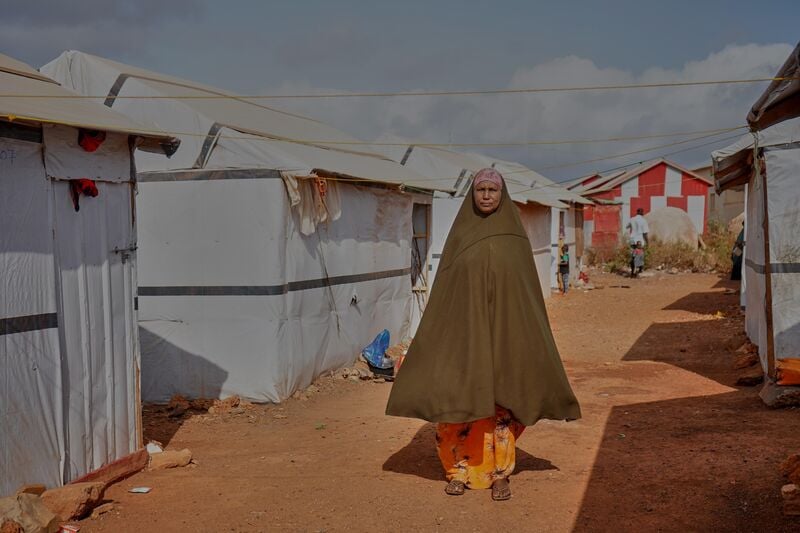
With support from ShelterBox and our partner, Juba Foundation, Nuria’s life took a hopeful turn. She received a shelter, essential kitchen utensils, and other necessities that brought a newfound sense of stability.
As well as receiving a new home and household items, Nuria was granted five years of land tenure – so they have the stability and security to stay on this land without fear of eviction.
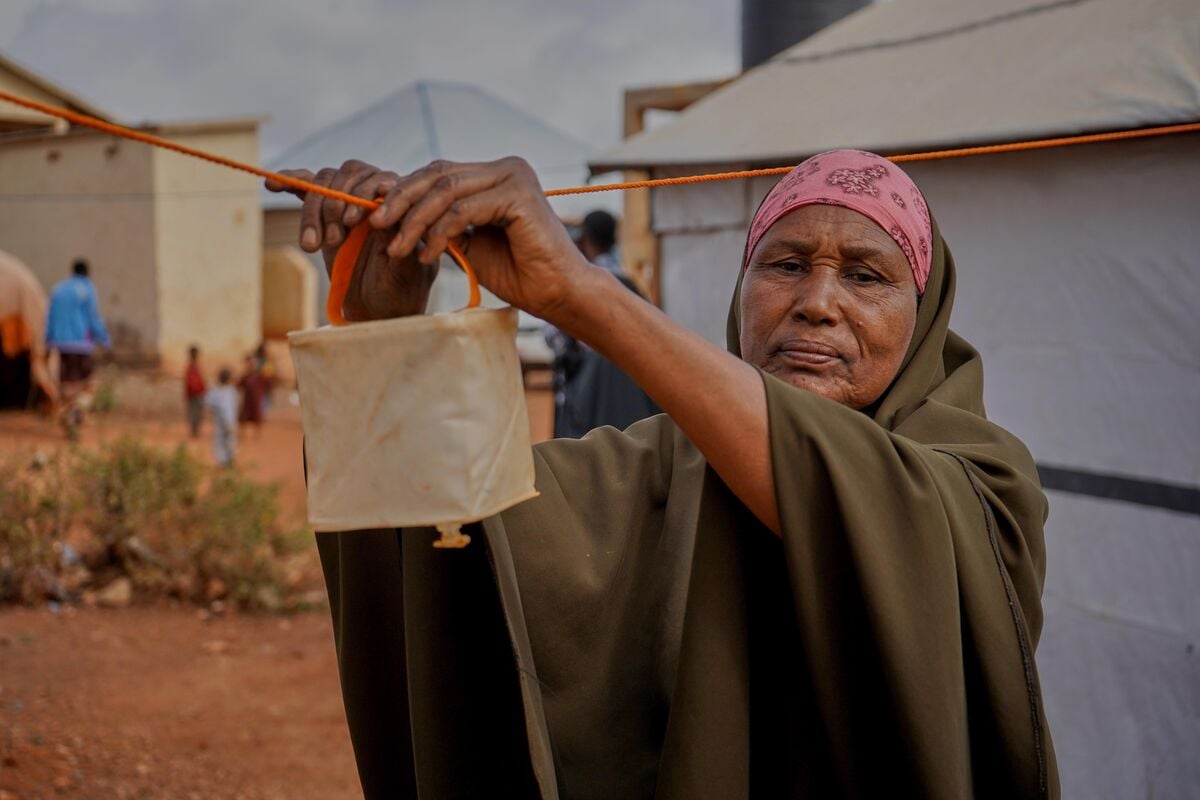
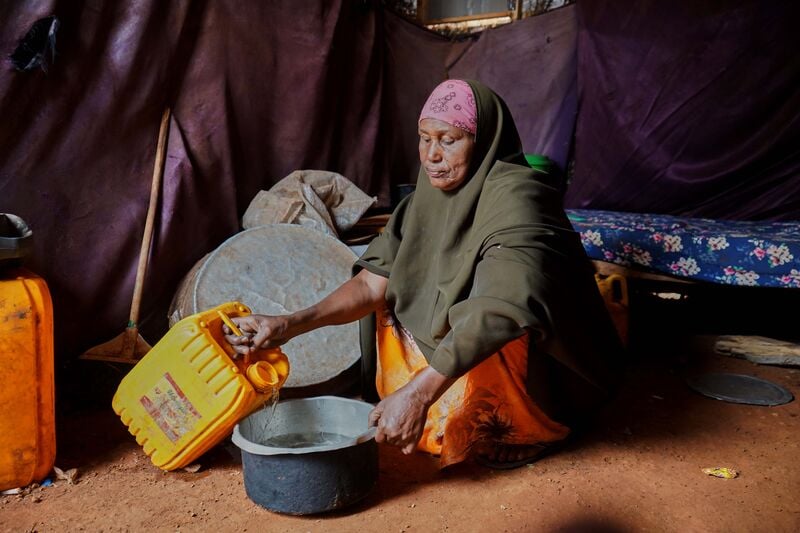
Nuria explains, “once we were out of that difficult situation, we arrived safely and lucky enough, we were provided with a tent shelter. We’ve settled in this residence, and no one is pressuring us to leave, which is a source of pride… These items mean a lot to me, especially when it comes to dealing with the rain and sun. Every day, I wake up early in the morning, and head out with my jerrycan to fetch water.”
Learn about our work in Somalia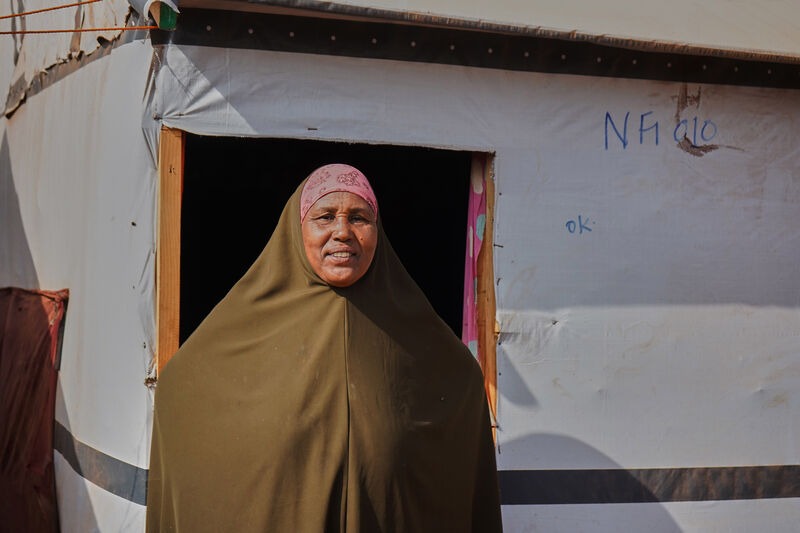
Hope and belonging amid crisis
Nuria’s story illustrates how climate change and conflict act together – destroying homes, livelihoods and safety. Yet through her struggle for survival, her resilience shines through.
She dreams of giving her children an education, safety, and a true sense of belonging.
I have a strong desire to ensure a good life and proper education for my children.
“If I were to learn that I truly owned the property of the house I reside in, I would enhance its decor, transforming it into a symbolic representation of belonging.”
Nuria’s story is a powerful reminder that families fleeing crisis need shelter and the security to rebuild.
Somalia
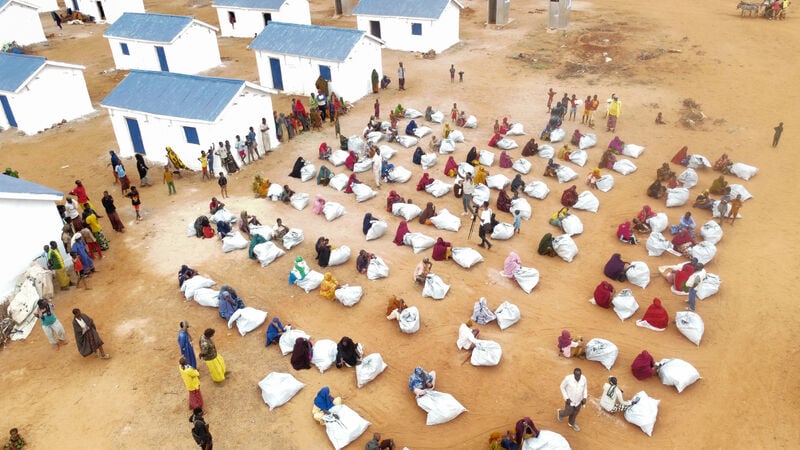
Somalia is caught in a perfect storm where climate change and conflict fuel a deepening humanitarian crisis.
Years of prolonged drought, deadly floods, and ongoing violence have displaced millions and left over 2 million people living in overcrowded camps, facing hunger and eviction. Disputes over land and water continue to rise.
Learn more about how we’re responding to the crisis and how you can help:
What's happening in SOmalia?