At ShelterBox, we are committed to environmental sustainability. We balance our humanitarian work with environmental responsibility.
Our sustainability priorities for 2024-2026 are:

By using eco-friendly, sustainable methods in all we do, we can make big changes and help create a greener, stronger future.
Sustainability is not a one-size-fits-all solution; it is a dynamic approach that should be part of all of our operations. We’re learning and evolving with each step. Small, sustained changes can lead to big impacts.
Download the full report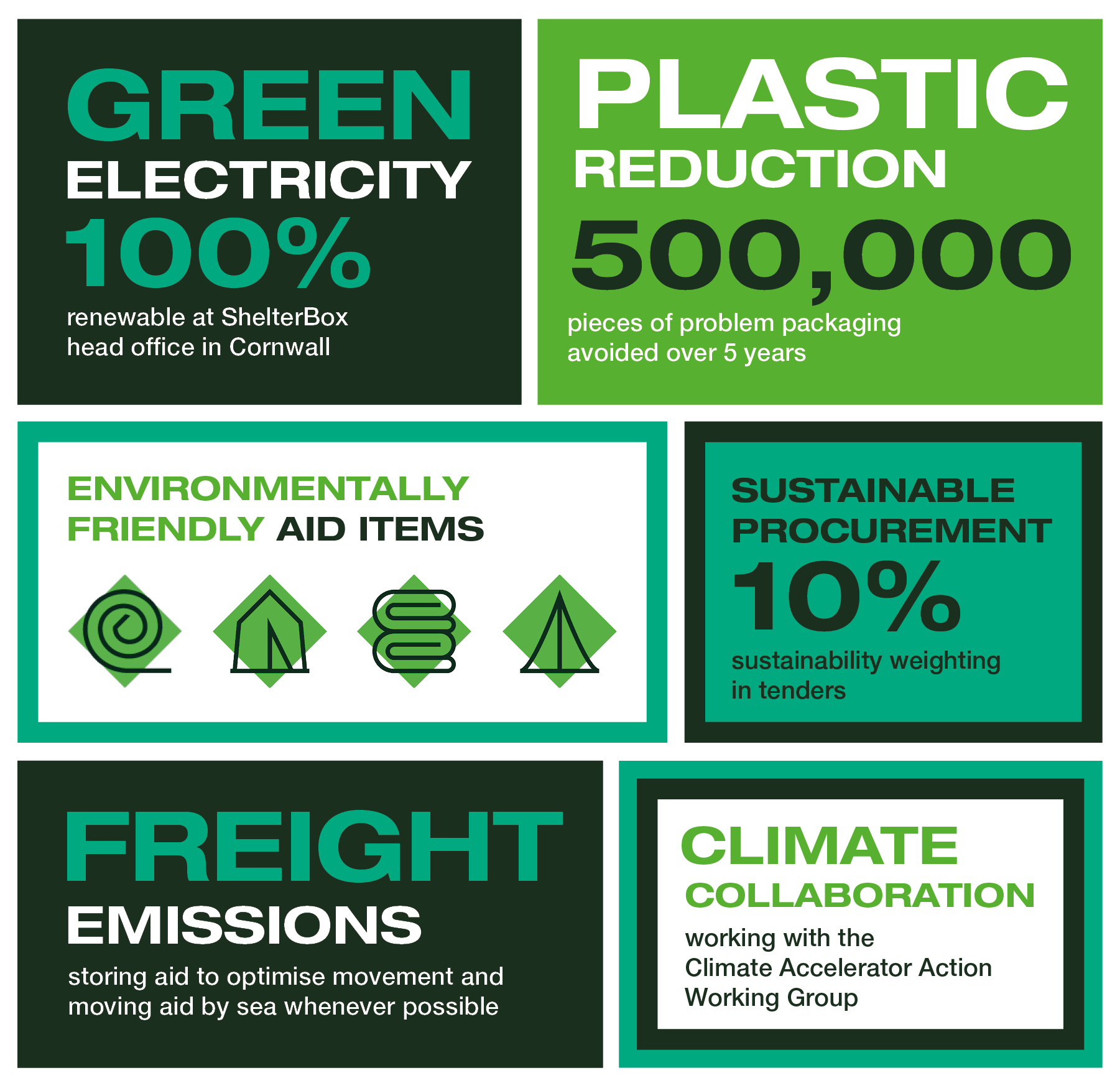
We made progress in 2024
Green electricity. We switched to 100% renewable electricity at our Cornwall head office. This cut costs by around 16% and reduced our carbon footprint.
Plastic reduction. We replaced non-essential plastic packaging with paper alternatives for items like kitchen sets. From now on, all of our core aid items will follow the United Nations (UN) and International Committee of the Red Cross (ICRC) minimal packaging specifications. Over 5 years we have avoided using more than 500,000 pieces of problem plastic packaging.
Environmentally friendly aid items. We found environmentally friendly alternatives for many of our aid items. This includes blankets, sleeping mats, buckets, and tarpaulins. We will be working to find ways to introduce these into our responses for 2025.
Sustainable procurement. We’ve developed a comprehensive Supplier Code of Conduct. This ensures our suppliers align with our ethical and environmental requirements.
Freight emissions. We moved stock by sea freight whenever possible to minimise air freight. We started to store aid in West and Central Africa to potentially optimise the movement of stock.
Climate collaboration. We joined the Climate Accelerator Action Working Group with other major charities. This will measure the carbon footprint of common aid items.
End-of-life use
We have learned that some of our aid items can be upcycled. There are a number of inspiring stories from Mozambique, Morocco, Somalia, and the Philippines.
We’re making sure that aid items are as reusable and recyclable as possible. This means they can have a life after they have served their original purpose. One great example of this is packaging that can be broken down and weaved into baskets and carpets.
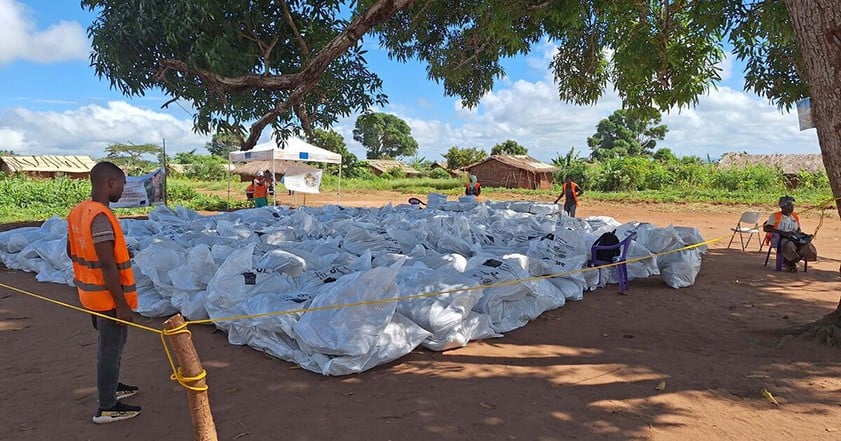
Finding new uses for aid packaging in Mozambique
When we support communities after disaster, we aim to avoid adding to the challenges people are already facing. This aligns with the ‘do no harm’ principle. We’re committed to minimising any environmental impact on affected communities.
As part of this we want to reduce the amount of waste from our aid materials. But aid items like tarpaulins need to be wrapped during shipping to protect them. In Mozambique, our partner CARE Mozambique has been giving aid packaging a new life.
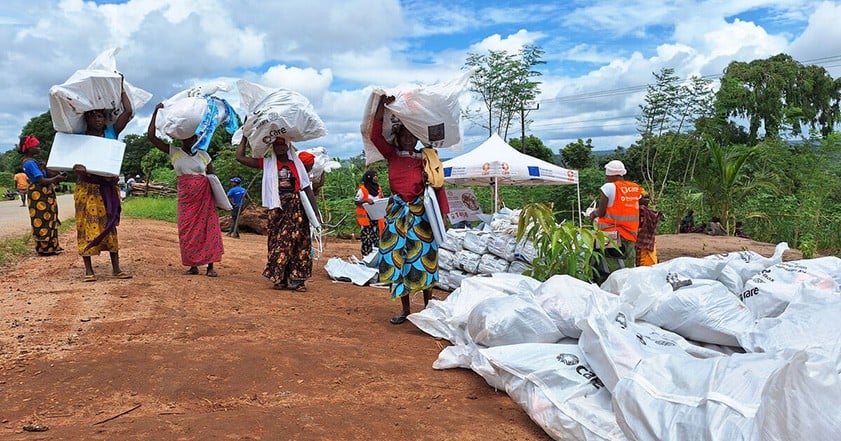
CARE Mozambique set up a committee to develop ways to reuse aid waste. The committee collects plastic tarpaulin bags and baling straps which can be used to improve shelters. These are then offered to families where the need is greatest.
Some tarpaulin packaging and straps are being used to create walls and doors for latrines (toilets) in Macomia. Women said that they had faced harassment when using the latrine. It’s hoped that the added walls and doors will offer more privacy and reduce such incidents. It’s a great example of how reusing waste can help a community.
Members of a Women and Girls Safe Space have been reusing waste materials by turning leftover bags and tarpaulins into carpets. They also plan to create items like baskets and footballs from these materials. One person has been repurposing pallet and bale strapping from the tarpaulins, and weaving them into household items.
Our latest project in Mozambique is integrated with an ECHO, EU funded project.
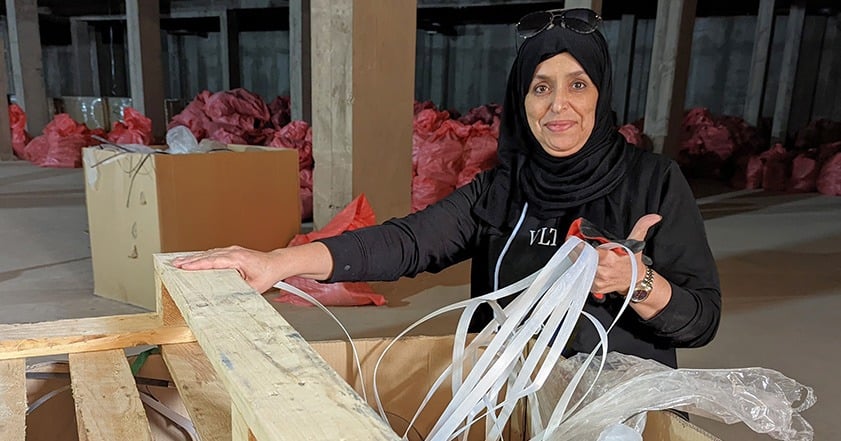
Reusing and recycling our aid packaging in Morocco
The team on our recent Morocco earthquake response explored ways to reduce our environmental impact.
We need our aid items to keep in good condition while in transit, so some packaging is necessary. This usually consists of plastic strapping, bags, poly-propylene woven sheets and cardboard boxes. And aid is transported on wooden pallets.
In Morocco we had over 330 wooden pallets in our warehouse in Marrakech. We didn’t want them to be thrown away or cause issues for the village communities we were supporting. With some research and thanks to one of our partners, Le Foundation Grand Atlas, these items were put to good use.
Habiba Guonaine (pictured) from a women’s association in Marrakech arranged for the plastics to be taken to a recycling centre. They were ground down and made into pellets. The pellets were used to create new items, like kitchen utensils, bottles for cleaning supplies, and rubbish bags.
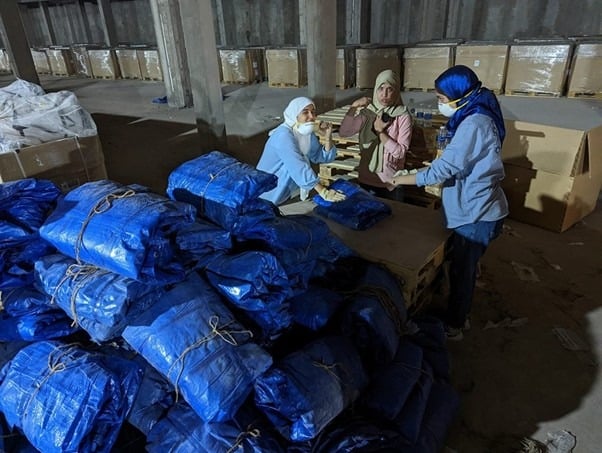
Some of the pallets and cardboard were used by the women’s association for the people they were working with in the foothills of the Atlas Mountains. The pallets were used as flooring in shelters. They keep mattresses off cold and muddy ground when it rains. The cardboard helped insulate the single-walled tents some people had been living in since the earthquake. The poly-propylene woven sheets were used to patch up shelters. They also helped keep ground water and mud out of tents.
Along with the women’s association, The Rotary Club of Majorelle made use of a further 100 pallets. These helped keep furniture and bedding off the ground, insulated from the cold.
These simple initiatives not only reduced waste. They also helped to keep families warm and dry at a time of year when temperatures plummet in the mountains, and snowfall is common.
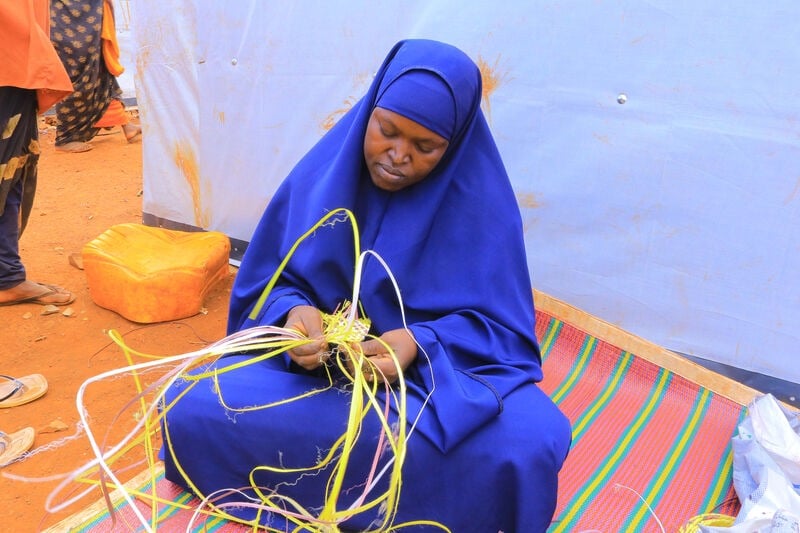
Somalia’s climate crisis meets innovative solutions
Somalia grappling with intense climate challenges, political instability, and economic pressures. The country is in a constant humanitarian crisis. Frequent flooding destroys farmland and displaces hundreds of thousands of people.
In partnership with the Juba Foundation, we supported 2,600 households with essential toolkits and tarpaulins. These helped protect people from the relentless rains and scorching heat.
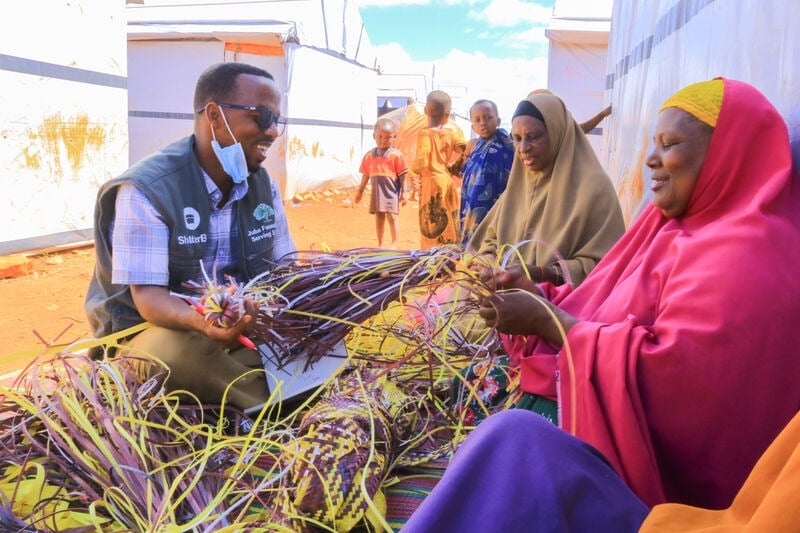
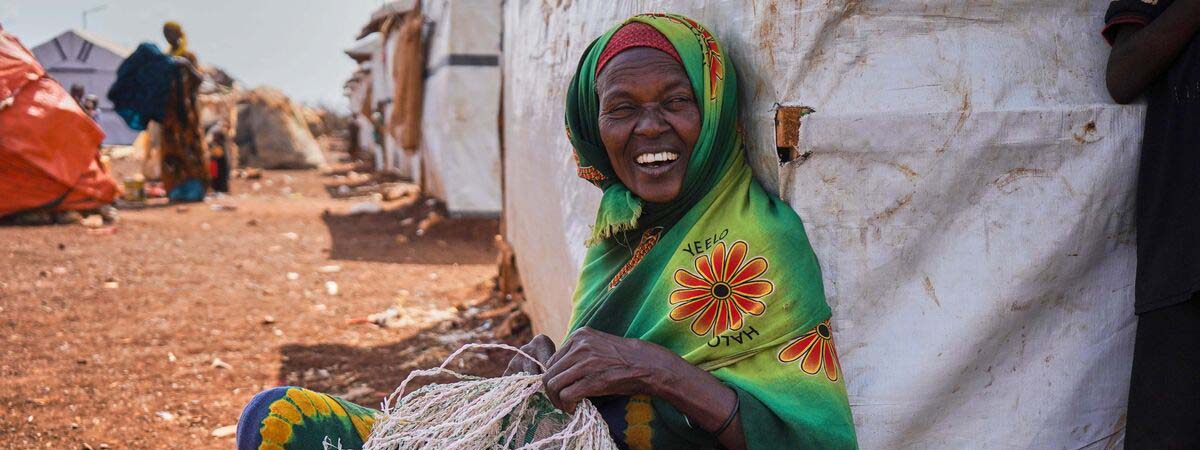
The package was used creatively too. Community members are transforming the tarpaulin bale straps into woven baskets.
One staff member from the Juba Foundation shared,
“People are making baskets to order, and the demand is growing. Some even receive orders from outside the camp. This new skill has brought a fresh income stream to many.”
This innovative repurposing provides vital protection and diverts waste from landfill. Whilst also creating new economic opportunities for the community.
Turning crisis into creativity: ShelterBox’s impact in Malawi
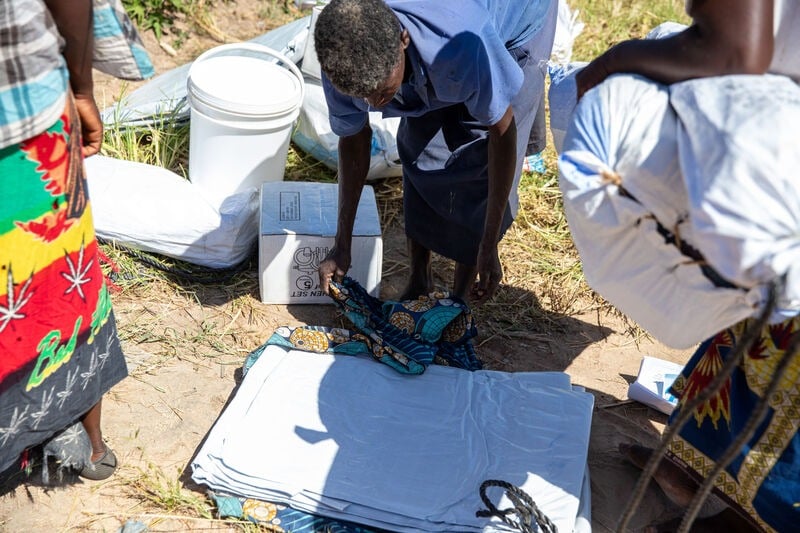
In Malawi’s Nkhotakota district, severe flooding from heavy rains left many families without homes. ShelterBox supported around 1,330 families with tarpaulins, shelter kits, mosquito nets, and blankets.
Some community members also found innovative uses for the packaging materials. For example several people turned them into functional carpets.
Case Story: Kuya Francisco after Typhoon Rai
Typhoon Rai, known locally as Oddette, devastated many areas of the Cebu, in the Philippines in December 2021. Many homes were damaged, including Kuya Francisco’s.
ShelterBox sheltered over 7,000 families with sheet metal roofing, tools, shelter kits, tarpaulins, and solar lights.
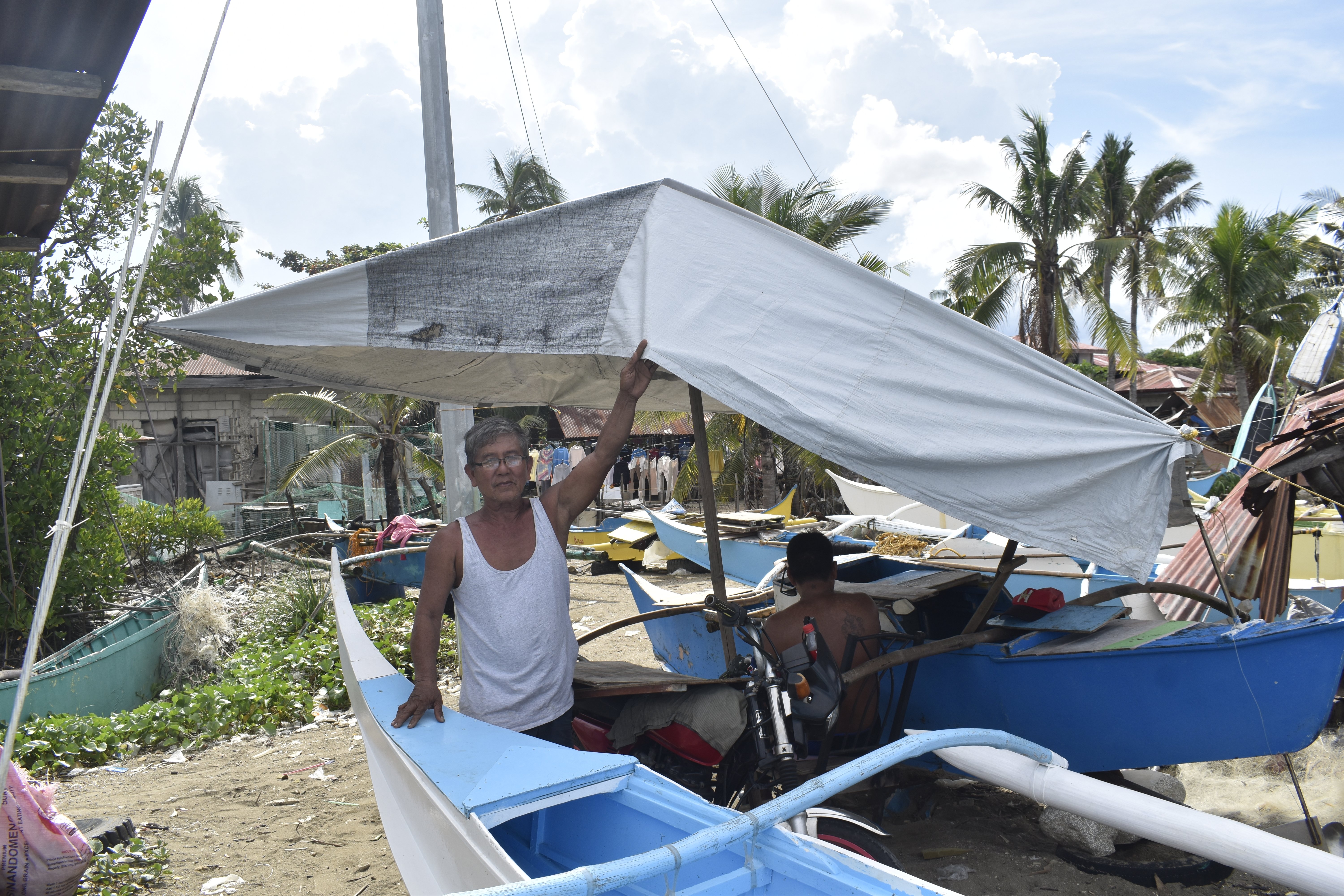
Kuya Francisco’s son helped to collect the waste tarpaulin packaging and gave it to Kuya Francisco to sew. They made one large sheet, which he passed on to other communities in need.
As the community gradually recovered, some families including Kuya Francisco’s neighbours, found they no longer needed the tarpaulins. Rather than letting these go to waste, he collected them and stitched them together to create larger sheets. These were then repurposed into sheds for fellow fishermen who had also been affected by the typhoon.
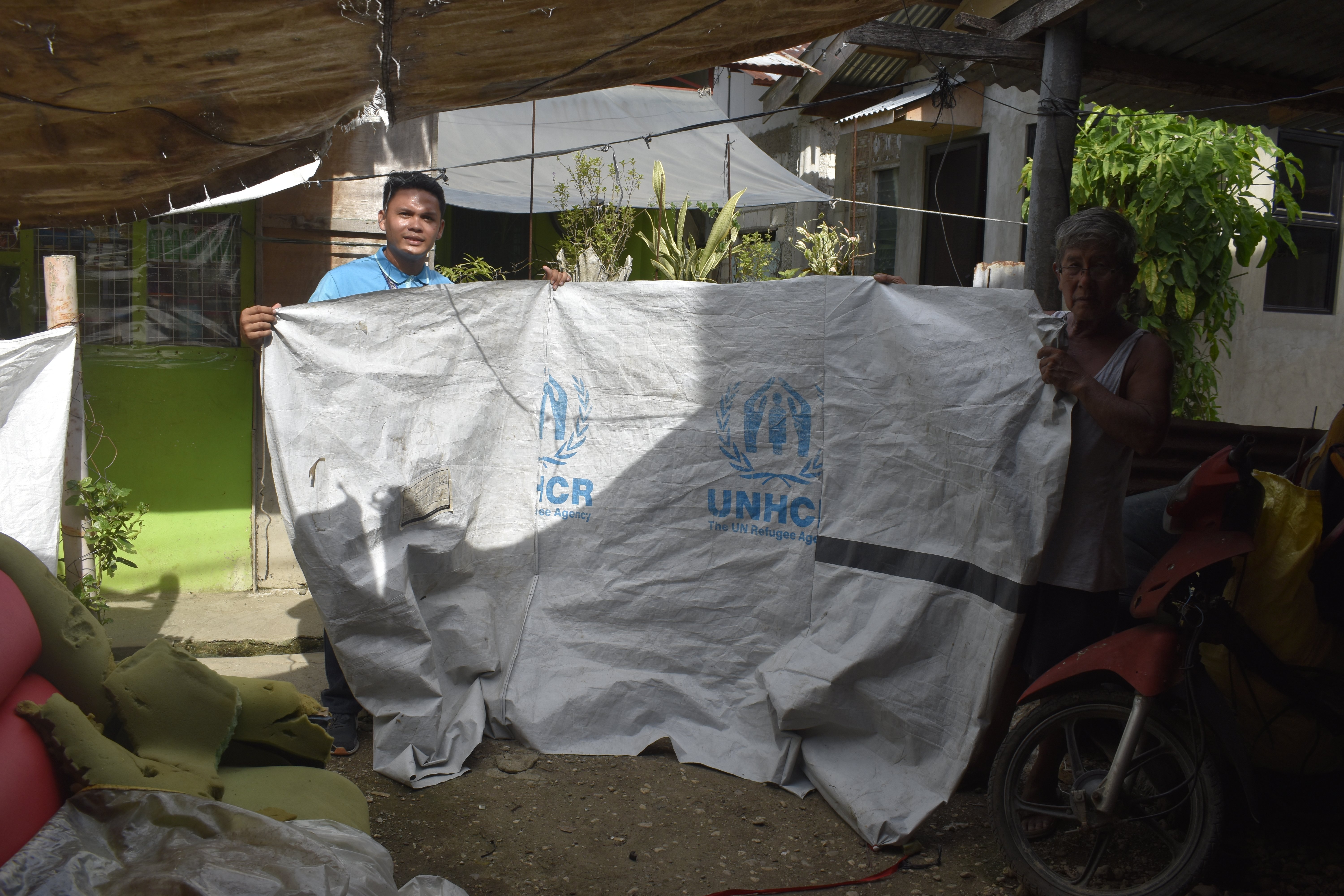
Kuya Francisco didn’t stop there. He recognised the ongoing struggles of other households. He gave the sewn sheeting to these families who had not fully rebuilt their homes. This helped them improve their temporary shelters.
Kuya Francisco said,
“Instead of letting the tarpaulins go to waste, I thought, why not sew them together and create something bigger that could help others? It’s a way to give back and support those who need it the most.”
Kuya Francisco’s story is a testament to community spirit. By repurposing materials he no longer needed, he continued aiding his community long after the storm had passed.