

A tsunami is a series of giant, fast-moving waves caused by volcanic eruptions, earthquakes or landslides.
They are rare, usually happening around twice a year, but they can have devastating effects. These powerful waves can destroy entire communities and sweep away homes, roads and crops.
Find out more about tsunamis, what causes them and what the effects are for communities.
stay informed on disasters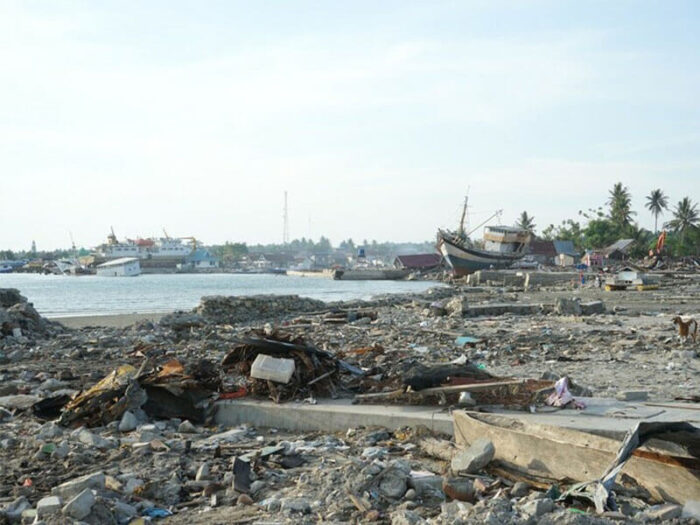
What is a tsunami?
A tsunami is a series of giant waves caused by earthquakes or undersea volcanic eruptions.
It sends a surge of water onto land, often reaching heights of over 100 feet. Although tsunami waves do not reach great heights out in the depths of the ocean, as they enter shallower water they begin to grow in energy and height.
Tsunami waves can tear across the sea at speeds of 500 miles an hour. The depth of the ocean determines the speed – travelling as fast as a jet plane over deep waters and slowing down when reaching shallow waters.
What causes a tsunami?
Earthquakes
The most common cause of a tsunami is an earthquake on the seafloor. When slabs of rock move past each other suddenly, it causes the overlying water to move, sending out a series of rolling waves that grow into a tsunami. A recent example is the powerful earthquake off Russia’s coast that triggered tsunami waves across Hawaii, the US, and Japan.
Landslides
Underwater landslides can also cause tsunamis. The movement of rock sliding downhill draws the water down from all sides, colliding in the middle. This launches a great wave radiating out.
Volcanic eruptions
Volcanoes can create a tsunami when an explosive eruption causes the tectonic plates to move, generating huge waves. Large amounts of lava flowing into the ocean can also trigger a tsunami.
Although rare, asteroid or meteor crashes in the ocean could also cause tsunamis.
What are the effects of a tsunami?
Tsunamis can have a devastating effect on people’s lives.
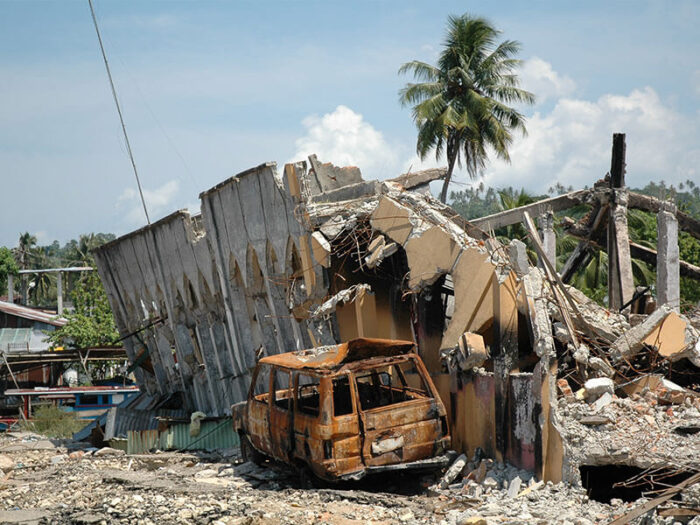
For example, they can completely wash away homes, causing families to lose everything they own.
Their destructive force is so powerful that huge ships can end up up to a kilometre inland. People must deal with huge piles of debris that need clearing before they can start rebuilding their homes and lives.
Because they can be hard to detect, tsunamis can also cause a high death toll. Tsunami waves don’t grow in size until they reach shallower waters, which means they can strike with very little warning.
They can also cause further aftershocks which create landslides, power outages and greater damage to homes. This is what we witnessed during our response to the earthquakes and tsunami in Indonesia.
Learn more about how we responded to the devastating earthquakes and tsunami in Indonesia in 2018.
The Boxing Day Tsunami – our first deployment
In 2004, the Indian Ocean Tsunami, commonly known as the Boxing Day Tsunami, became one of the most devastating environmental disasters in recorded history.
It was triggered by a massive undersea earthquake, the tsunami claimed the lives of hundreds of thousands of people and caused widespread destruction across multiple countries.
It is considered to be the most devastating tsunami on record.
ShelterBox was among the organisations that rapidly responded to the crisis, providing urgent aid to communities in Indonesia and Sri Lanka. Over 12,000 families received ShelterBoxes following the deadly disaster.
The boxes included tents and essential aid items to help families recover.
This disaster marked a significant turning point for us – it was the first time we deployed response teams directly to affected areas to oversee aid distribution.
Being present on the ground allowed us to assess needs first hand, coordinate support more effectively, and ensure families received the assistance they desperately required.
Learn more about our workWhat happens after a tsunami?
After a tsunami, floodwaters and damage to infrastructure can lead to contaminated water and food supplies. Thus, this increases the risk of dangerous diseases like malaria and cholera. If families are staying in shared shelters and living at close quarters, this can make spreading diseases easier.
As with any disaster, people can suffer from traumatic injuries after a tsunami. What makes a tsunami different is the suddenness with which it strikes. People may even experience mental health issues such as post-traumatic stress disorder.
Is a tsunami a natural disaster?
No. Tsunamis and other extreme events are not ‘natural disasters’.
But the term ‘natural disaster’, despite being widely used, is problematic.
Using the word ‘natural’ ignores the role that humans have in the disaster, assuming that the event would happen anyway and there is little that we can do to prevent it.
In fact, it’s the decisions we make that create a disaster.
Factors like living conditions and poverty, government capacity to prepare and respond, and the process of rebuilding and how efficient that would be, all define whether a disaster occurs as a result of the natural hazard.
So hazards are inevitable – but the impact they have on society is not.
Read more about the importance of avoiding the term ‘natural disaster’.
Why disasters are not naturalPlanning for tsunamis
What are the early warning systems?
Scientists use a tsunami warning system to detect tsunamis.
The system uses a network of seismic monitoring stations and sea-level gauges. This helps scientists detect whether an earthquake has triggered a tsunami.
Then, tsunami wave simulations can predict the wave height and arrival time at the coast.
But because tsunamis can appear so suddenly, the warnings do not always reach communities in time. Before the 2011 Japan tsunami, tsunami warnings were broadcast just minutes before its arrival. The warnings also underestimated its size, meaning that many people hadn’t evacuated.
Education, drills, evacuations signs and clear protocols are key in preventing the loss of life.
Learn about storm monitoring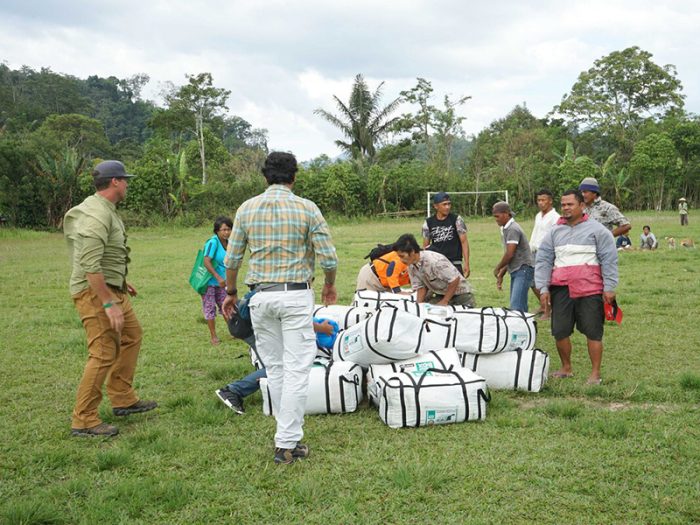

How does ShelterBox support families after a tsunami?
We provide emergency shelter and aid to communities affected by disasters like tsunamis.
Shelter and essential items like blankets, cooking sets and mosquito nets can allow families to create a safe space to begin to recover.
Also, people often don’t have access to clean water in the aftermath of disasters like tsunamis. So water filters and carriers can allow them to produce clean water.
And power lines can also be damaged for long periods of time. Solar lights are a practical solution, enabling families to pick up their normal routines.
We’ve supported families affected by tsunamis all over the world. In 2004, we responded in the aftermath of the Indian Ocean Tsunami. And in 2011, we supported communities after the Japan earthquake and tsunami.
More recently, in 2018, we responded to the earthquake and tsunami that shook Indonesia.
support people affected by crisis
Does climate change mean more tsunamis?
Climate change can increase the risk and impact of tsunamis in several ways:
- Rising sea levels: As global warming causes sea levels to rise, tsunami waves can reach further inland and cause greater destruction.
- Changes in earthquakes and landslides: Climate change affects geological activity, including the frequency of underwater earthquakes and landslides—both of which can trigger tsunamis.
- New risk areas: Some coastal regions that previously didn’t experience tsunami threats may become more vulnerable due to shifting environmental conditions.
Overall, while climate change directly links to the frequency and impact of tsunamis, making their effects more severe and may increase the likelihood of them occurring in certain areas.
How does this link to climate change?