

Hurricanes, typhoons and cyclones are all tropical storms. When they hit, they can be destructive and even deadly, depending on how powerful they are.
ShelterBox has responded to more than 100 tropical storms and supported more than 80,000 people. We are currently responding to Typhoon Bualoi in the Philippines, which has forced thousands of people to flee their homes. Learn more about it here.
Find out more about what hurricanes are, the difference between hurricanes, typhoons and cyclones, and how to prepare and respond to a hurricane disaster.
stay informed on disastersWhat are hurricanes and are they getting worse?
Hurricanes and typhoons are cyclonic weather systems that form in the tropics and have sustained wind speeds of more than 74 miles per hour.
Some of the most destructive hurricanes occurred in the last 20 years, including Hurricanes Irma and Maria in 2017, and Hurricane Katrina in 2005. The combined damage of these three hurricanes is estimated to a whopping 317.9 billion US dollars.

What’s the difference between a hurricane, a typhoon and a cyclone?
Hurricanes, typhoons and cyclones are all tropical storms.
The only difference is where they form. Hurricanes form in the tropical Atlantic and the Eastern Pacific Ocean. Typhoons form in the West Pacific Ocean and cyclones form south of the equator, off the coast of places such as Australia and Madagascar.
What causes hurricanes, typhoons and cyclones?
Hurricanes and typhoons are delicate and need specific conditions to form and persist. The sea temperature needs to be at least 27°C, which is why they only form in the tropics.
The air above the sea heats up via convection and this warm, moist air rises. As the atmosphere heats up, the pressure changes and lowers at the surface.
Wind from the surrounding areas then rushes in to fill the space left by this area of low pressure, while the earth’s rotation causes the wind to spiral and become cyclical.
The eye of the storm tends to form once the wind speed reaches 74 miles per hour – the point at which a tropical storm is reclassified as a hurricane or a typhoon.
These storms are fuelled by high humidity, so a change of wind or dry air can make them weaken and eventually dissipate.
When and where do hurricanes occur?
Hurricanes form in the Atlantic and the eastern Pacific, during what is called the hurricane season. The Atlantic hurricane season runs from June 1 through November 30. Usually, there will be between six and eight hurricanes spread across this period.
Having three or more simultaneous hurricanes usually only happens once in a decade.
How are hurricanes named?
Since the early 1950s, hurricanes have been named after women.
In 1980, men’s names were introduced, and now the storms are named alphabetically, alternating between male and female names.
The names are repeated every six years, but if a storm is particularly severe, then the name is retired from use.
The word hurricane may have originated from either Hurakan, the ancient Mayan god of wind, storm and fire, or Huracan, the god of evil, in the Caribbean language of Taino.
Many thanks to Dr Adam Lea, a Senior Research Scientist at University College London in the department of space and climate physics.
Learn about our current typhoon response

How is hurricane strength measured?
The Saffir-Simpson scale is the standard scale for rating the severity of a hurricane as measured by the damage it causes.
Hurricanes reaching Category 3 and higher are considered major hurricanes because of their potential for significant loss of life and damage. Category 1 and 2 storms are still dangerous, however, and require preventative measures. (NHC).
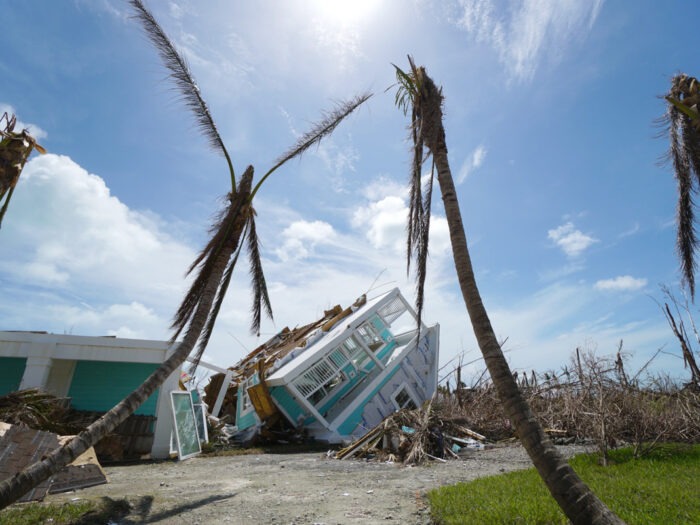
What are hurricane seasons and are they getting worse each year?
The official Atlantic hurricane season is between 1 June – 30 November. We could, however, see hurricanes forming before the official start of the hurricane season. They’re fuelled by warm ocean water and due to rising sea temperatures from climate change, the frequency and strength of storms are intensifying.
That’s why experts are predicting stronger and more frequent storms. As climate change intensifies, in the next 20 years, more than 200 million people will be uprooted by extreme storms.
Hurricanes cyclones and typhoons are all names for huge tropical storms that form over warm ocean waters. They find energy from warm air rising and condensing, which fuels wind and heavy rain – causing a storm.
Learn how we monitor storms
Are hurricanes, cyclones and typhoons natural disasters?
Hurricanes, cyclones, and other extreme weather events are not ‘natural disasters’.
The term ‘natural disaster’, despite being widely used, is problematic.
Using the word ‘natural’ ignores the role that humans have in the disaster, assuming that the event would happen anyway and there is little that we can do to prevent it.
It’s actually the decisions we make that create a disaster.
Factors like living conditions and poverty, government capacity to prepare and respond, as well as the process of rebuilding and how efficient that would be, are all factors that will define whether a disaster occurs as a result of the natural hazard.
Hazards are inevitable – but the impact they have on society is not.
Read more about the importance of avoiding the term ‘natural disaster’.
Learn more
Does climate change mean more hurricanes and typhoons?
Climate change is fuelling warmer oceans around the world and higher sea temperatures fuel tropical storms. The changing climate is also increasing wind speeds and rainfall in some regions. This is because warmer air can hold more water, leading to more intense downpours that can cause severe flooding.
Experts predict it’s unlikely that storms will become more frequent overall, however storms will intensify more quickly and so we will have more extreme weather.
What is the climate crisis?What impact do hurricanes and typhoons have?
In the simplest terms, hurricanes and typhoons can be deadly, causing severe damage to buildings and infrastructure.
When a hurricane hits, people need to decide whether to stay in their homes or evacuate to safer ground. In some cases, there is nowhere safe to go, and many people worry about leaving their homes for fear of looting.
When Hurricane Irma hit the Caribbean in September 2017, it was so powerful that very few buildings could withstand it – you’d need a reinforced concrete building to survive unscathed.
Floodwater is also a major danger. Aside from the damage it could cause to buildings and infrastructure, the main cause of death in a hurricane or typhoon is drowning due to storm surges and flooding.
How long do hurricanes last – and how long does it take for people to recover?
A hurricane from formation to dissipation could last hours, weeks or even a month. The longest lasting cyclone, Hurricane John, in Mexico, lasted 31 days.
It can take months or years for people to recover from a hurricane, key factors like the severity of the storm, the damage of infrastructure and the socio-economic condition of the area affect recovery times.
How to prepare, monitor and respond to hurricanes
Emergency preparedness
Hurricanes happen every year. Before a disaster happens, we make sure we are ready to support. When disasters strike without warning, emergency shelter can be the difference between life and death. Our ongoing preparedness work will help us be ready and become even more efficient and effective.
- We are prepositioning more aid in more places around the world and increasing our database of approved suppliers and pipelines.
- We are building a library of plans so that critical information needed to develop a humanitarian response is researched and documented ahead of time.
- We are growing our network of potential partners to ensure we have eyes and ears in the places we most often work.
Monitoring hurricanes
When we’re monitoring a tropical storm, we use a variety of sources to give us a detailed overview of the situation.
Depending on where a storm is predicted to make landfall, we will often monitor local news sources and government and disaster management agency websites. This helps us understand how governments and local agencies are preparing for and responding to the storm.
We continue to monitor after the storm has made landfall to understand the impact on affected communities, and to see if there will be an emergency shelter need.
learn about our workRecovery and support after hurricanes
The aftermath of a hurricane can be devastating, leaving people in urgent need of support and entire communities facing the challenge of rebuilding. One of the highest priorities is finding a safe place to live, along with implementing future storm-proofing measures to strengthen homes for the future.
We provide emergency shelter for people who have lost their homes to extreme storms. We’re able to do this because of donations from our supporters and it means we can get aid to communities devastated by tropical storms as quickly as possible.
We have responded to more than 100 tropical storms (as of April 2025) and supported more than 80,000 people. Our first response to a tropical storm was Hurricane Jeanne in Haiti, and more recently supporting people following Cyclone Chido in December 2024.
You can help us be ready too. Fundraising makes it possible to have shelter aid prepositioned in warehouses around the world. That allows us to reach people in need.
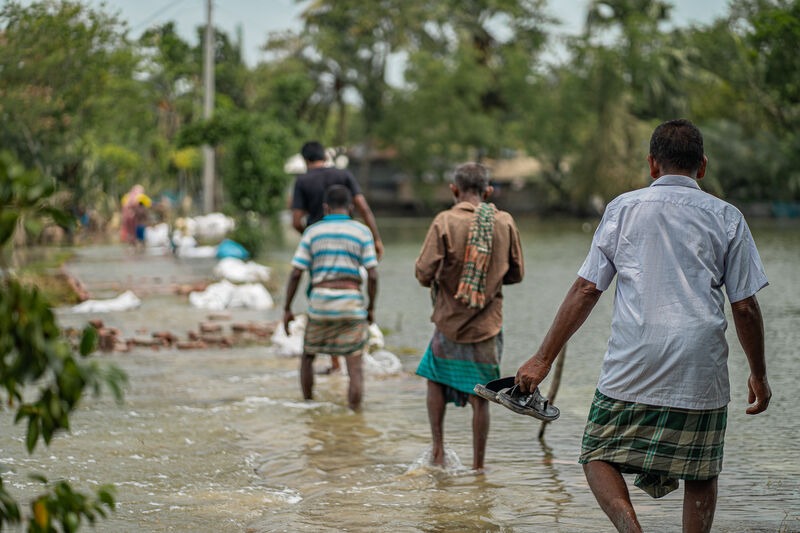
Responding to Cyclone Remal, Bangladesh
In May 2024, Cyclone Remal made landfall in Bangladesh. It brought devastating winds and intense flooding that forced thousands of people from their homes.
ShelterBox partnered with local aid organisation, Uttaran, to provide shelter to vulnerable families. We focused on families whose homes were completely destroyed. The aid provided helped them build better-quality shelters than those lost in the cyclone. Learn more about the response here.
We are currently responding to Typhoon Bualoi in the Philippines which has forced thousands of people to leave their homes. Learn about the Typhoon and how you can help.
Donate to Typhoon Bualoi

Hurricane Beryl, the Caribbean
In 2024, Hurricane Beryl swept through the Caribbean with devastating force, destroying homes, taking lives, and reaching sustained winds of up to 90 mph. Hurricane Beryl became the earliest category 4 hurricane on record in the Atlantic.
When Hurricane Beryl tore through her town, Gloria’s home – the place she and her husband had cherished for over 50 years – was gone in an instant.
“This one didn’t give us any notice – it took us by surprise. We don’t expect hurricanes in July.”
We supported people in Carriacou and Petite Martinique in Grenada, where many buildings, homes, and schools were damaged or destroyed. Tents provided shelter and privacy for families living in community buildings or evacuation centres, allowing them to return to the areas where their homes once stood. As they continue to recover and rebuild, this sense of normality has been vital.
Donate now