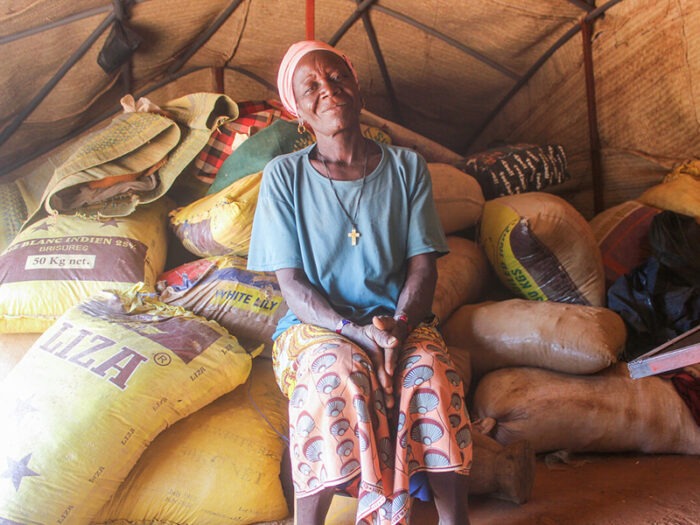
Woman sitting on bags of gravel inside a shelter
Icon Info
Kouka and her seven children are just one of the thousands of families who fled the violence.
Hide

Overview of the crisis in Burkina-Faso

Burkina Faso has been named the world’s most neglected crisis for two years running by the Norwegian Refugee Council. The support people need is falling short, and the humanitarian response remains critically underfunded.

Since 2019, more than two million people – about 1 in 10 people – have been forced to flee their homes because of violence from armed groups and intercommunal conflict. The crisis touches every part of the country. All 13 regions are affected, and nearly six million people need aid.

Many affected by the conflict are also affected by extreme weather. It’s pushing even more people from their homes to live in makeshift shelters made from straw, plastic bags, or whatever they can find. Some people have been displaced for years, and their makeshift homes are falling apart. Others are returning to their villages to find homes damaged, destroyed, or looted.

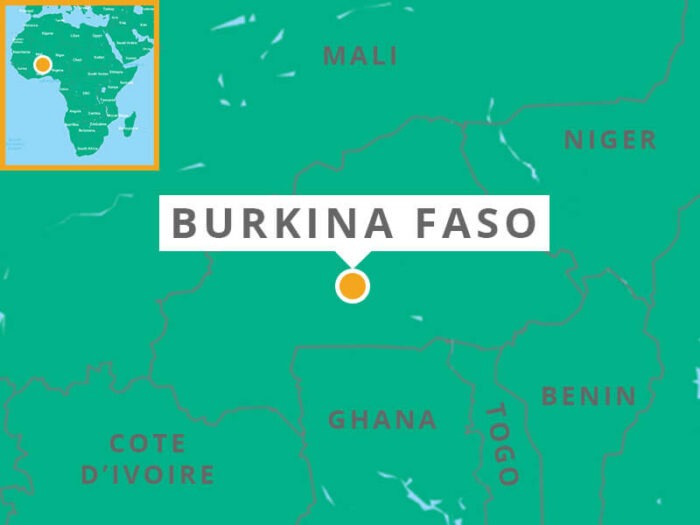
Map showing location of Burkina Faso in Africa.

Where is Burkina Faso?

Burkina Faso is a landlocked country in West Africa. It’s bordered by Mali, Niger, Benin, Côte d’Ivoire, Ghana, and Togo.

Its landscape has a largely flat savanna terrain, with semi-arid conditions in the north, and greener, more fertile areas in the south. Burkina Faso has a tropical climate, with a distinct rainy and dry season. The climate is generally hot and dry, with limited rainfall in the north.

The Sahel Crisis explained

The central Sahel region, which includes the countries of Burkina Faso, Mali and Niger, is facing one of the fastest-growing yet forgotten displacement crises in the world.

Over 3 million people have been forced to flee their homes and at least 29 million are in desperate need of humanitarian assistance.

The crisis began with violence in northern Mali in 2011 and has spread across the region, fuelled by conflict, poverty, food insecurity and the growing impacts of climate change.

In Burkina Faso the situation is especially severe. Armed groups now control nearly half of the country, cutting off cities and towns. Blockades are stopping vital supplies from getting through, pushing many communities to the brink.


These blockades make it hard for people to get important services, stop farming and trade, and destroy ways for people to make a living. In some towns, no new supplies have arrived for months, causing serious hunger problems.

Women and girls are also facing rising levels of violence, including kidnappings and attacks. They are at extreme risk when searching for basic essentials such as food and water.

Displaced families are living in crowded camps or buildings such as schools. The insecurity and instability are making it difficult for aid workers to reach those in most need. A lack of resources is further hampering aid efforts across the country’s 13 regions – all of which are hosting displaced people.

How is conflict and climate overlapping to drive displacement?

In Burkina Faso, conflict and climate change are entwined, creating a vicious cycle where each exacerbates the other and forces more people from their homes.

The country sits in the Sahel, one of the most climate-affected regions in the world. As the land gets hotter and drier, droughts, unpredictable rains, and desertification are making it harder for farmers and herders to survive. Less water and farmland mean more competition for resources, driving people from homes and increasing tension between communities.

At the same time, armed conflict is forcing people to flee. But even after escaping violence, many are hit again by extreme weather like floods, droughts, or strong winds.

Some families are displaced more than once, making it harder for them to recover. It means people are remaining displaced for longer. People end up in overcrowded camps or shelters like school buildings, often without enough food, clean water, or medical care. Some stay with relatives, but many have nowhere safe to go.

Host communities, already struggling with limited resources, are under more pressure. And with each new crisis, it becomes harder for everyone to cope. In this cycle, people don’t get a break.

One crisis rolls into the next, leaving families stuck in survival mode. Sometimes the only work to come by is as a paid fighter with one of the armed groups.

what's displacement?
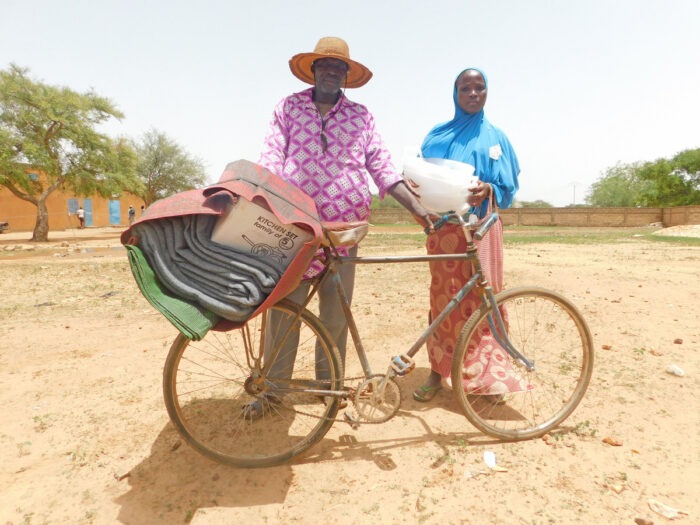
A man and a girl standing behind a bicycle holding aid.
Icon Info
Issaka and his daughter Adama received ShelterBox aid in 2020. Isaaka said: "We are very happy with what we received. As displaced people, this is the first time we have had such help. […] Thank you to everyone involved, may God give you long life so that you can continue to help all those in need."
Hide

How is ShelterBox helping?

Since 2020, we have been working with our partner HELP Burkina Faso since 2020 to support tens of thousands of people.

To begin with we supported people to improve their makeshift shelters with tarpaulins, and items like kitchen sets, sleeping mats, blankets, soap, and buckets.

As displacement became long-term due to conflict and extreme weather, we introduced Sahelian tents. They are locally made and designed to last 18 months.

We have approval for a seventh project with HELP Burkina Faso. Our focus will be on emergency and transitional shelter to support thousands of people in Centre-Nord and Nord regions with high numbers of internally displaced people.

We’ve secured extra funding, which means we can support thousands more people (800 households) with traditional Sahelian tents. With this change, our project has been delayed slightly and will likely start in October. Community members will be able to earn cash by helping to build the shelters.

Donate now
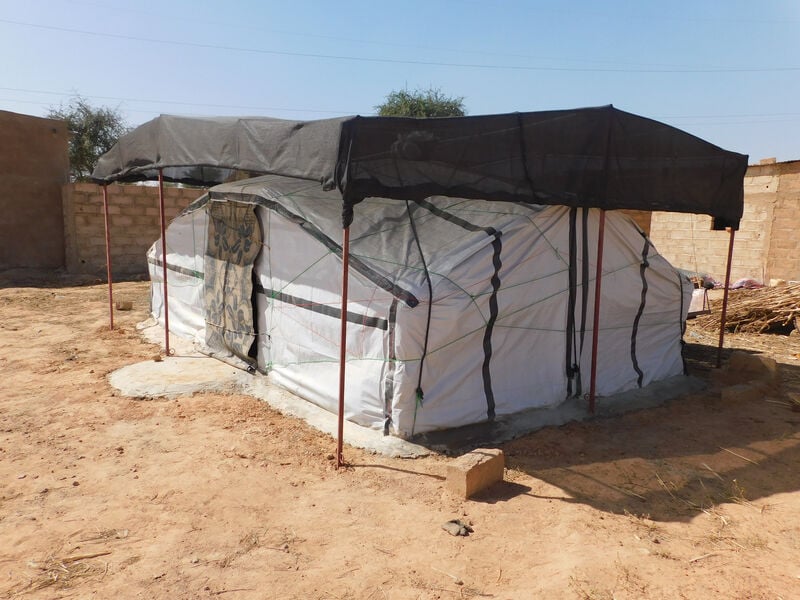
An emergency tent adapted for extreme weather.
Icon Info
The Sahel tent in Burkina Faso.
Hide

How are we adapting our response to address climate?

Some people have been living in emergency shelters for up to five years. Shelters have started to degrade over time, damaged by the heat or heavy rains. We’re making changes to the shelters, so people can stay in them for longer.

We have been working with HELP to provide emergency shelters known as Sahelian tents. These tents are constructed from locally sourced materials and offer a more durable structure for displaced families who have fled their homes to escape extremist violence.  We’ve added raised concrete bases to the tents to protect against flooding and improve hygiene.

Families living in Sahelian tents have told us how intense daytime heat makes life difficult. That’s why we’re piloting shade netting that filters UV rays, keeping shelters cooler and more comfortable. These nets are designed to fit over the Sahel tent and also help protect the tarpaulin, slowing wear from sun and rain. Improving comfort and durability remains a priority.

how do Climate and conflict link?
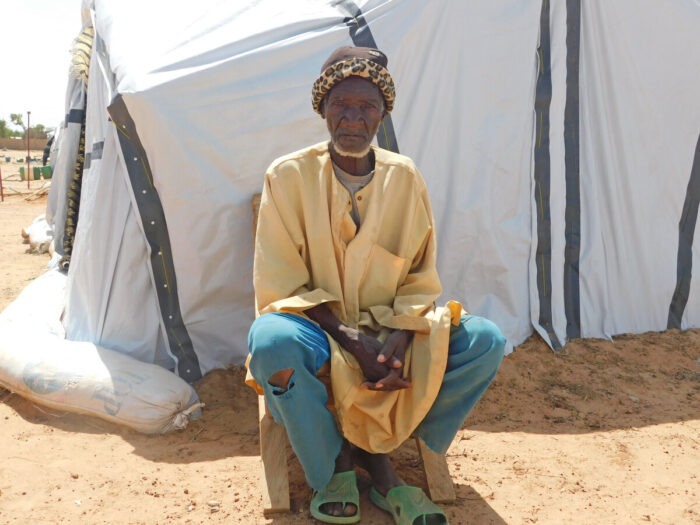
Man wearing yellow and blue sitting outside a tent
Icon Info
“Our life has completely changed now. We no longer have land for farming,
Hide

“We had no choice” Yabre’s Story fleeing violence

Yabre is one of the thousands of people who fled, leaving everything he owned behind. He is now living with his family in a camp for people who have fled the violence and have nowhere else to go.

We have provided Yabre and his family with tarpaulins, kitchen sets, mosquito nets and other essential aid items.

Yabre described the moment his life changed forever:

“When there were attacks in the market, we had no choice but to flee the village. We fled without taking anything with us. All the livestock remained in one place. We were welcomed in the schools for shelter then we came here.”

You can help more people like Yabre today.

More stories from Burkina Faso